April 28 Writing Tips, Tricks, Thoughts

Birthdays: Antonio Frasconi (1919), Harper Lee (1926), Lois Duncan (1934), Diane Johnson (1934), Alice Waters (1944), Kit Williams (1946), Christian Jacq (1947), Terry Pratchett (1948), Carolyn Forché (1950), Amy Hest (1950), Roberto Bolano (1953), Ian Rankin (1960)

Antonio Frasconi won Caldecott Honors for his artwork.

Harper Lee won the 1961 Pulitzer Prize for Literature for her book “To Kill a Mockingbird”.

Quote: “The first draft is just you telling yourself the story.” – Terry Pratchett

Tip: If you’re writing a series, set up a consistency spreadsheet with character names, attributes, cars, house, etc., settings, anything that you might need to keep straight. Do this with your first book and all following ones so you know who’s who and what’s what.

Jumpstart: Today is your character’s birthday. What’s the best gift they’ve gotten? The worst? From whom? Why was it the best or worst?

April 27 Writing Tips, Tricks, Thoughts

Birthdays: Edward Gibbon (1737), Mary Wollstonecraft (1759), Jessie Redmon Fauset (1882), Ludwig Bemelmans (1898), Cecil Day Lewis (1904), Irving Adler (1913), Tim LeHaye (1926), Jean Valentine (1934), John Burningham (1936), Ruth Glick (1942), August Wilson (1945), Nancy Shaw (1946), Rachel Caine (1962)

Jean Valentine was a 2004 National Book Award winner for her poetry.

Ruth Glick wrote novels under the name Rebecca York.

Quote: “Some people work better to go ‘seat of the pants’ … and some won’t start a road trip without a map. I’m a bit of both … I like a road map, but I’m not averse to taking interesting side roads too. I usually have a loose outline.” – Rachel Caine

Tip: Go over your book and find the words “it”, “thing”, and rewrite with stronger verbiage where possible. Instead of “I can’t do it today.” Try: “I can’t go on a picnic today.” “It” is too vague. You want to be more specific in your writing.

Extra note: I have been reading a lot of books lately for review that could definitely use a look by a good editor or proofreader. So many head-hopping POVs, mixed tenses, misused words and more. Please…if you are a writer, get a good editor or proofreader to go over your work. You think people won’t notice? We do.

Spotlight: Linda Griffin

In 1963, Neil Vincent, a middle-aged World War II veteran and “Christian atheist,” is working at Westfield Court as a chauffeur. He spends most of his spare time reading. Mary Claire DeWinter is a young, blind Catholic college student and reluctant heiress. To secure her inheritance, she has to marry within a year, and her aunt is pressuring her to marry a rich man who teased and bullied her when she was a child. Neil and Mary Claire shouldn’t even be friends, but the gulf between them is bridged by a shared love of books. Can they cross the bridge to more?

Buy Links:

Amazon

Barnes and Noble

Apple Books

Linda Griffin is a native of San Diego and has a BA in English from San Diego State University and an MLS from UCLA. As soon as she learned to read, she knew she wanted to be a “book maker.” She wrote her first story at the age of six and has been writing ever since. She retired from a position as fiction librarian for the San Diego Public Library to spend more time on her writing. Her stories have been published in numerous journals, including Eclectica, Thema, The Binnacle, Orbis, and most recently The Adirondack Review. Bridges is her fifth novel published by the Wild Rose Press after Seventeen Days (2018), The Rebound Effect (2019), Guilty Knowledge (2020), and Love, Death, and the Art of Cooking.

Social media links:

Website

Facebook

Instagram

Twitter

New Reviews are Up!

Under Fiction:

The Spirit of the Amaroq by James Charles – 5 Sparklers for this emotional book

The Art of Revenge by Joe Giordano – 4 Sparklers for this thriller

Under Mysteries:

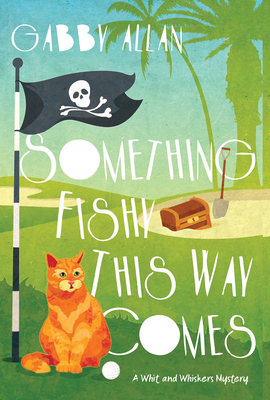
Something Fishy this Way Comes by Gabby Allan – 5 Sparklers for this second in her witty series

Jak Barley-Private Inquisitor and the Temple of Dorga, Fish Headed God of Death by Dan Ehl – 4 Sparklers for this witty medieval paranormal mystery

Under Nonfiction:

DBT for Anxiety by Liz Corpstein – 5+ Sparklers for this book on controlling anxiety

Under YA:

Shinji Takahashi and the Mark of the Coatl by Julie Kagawa – 5 sparklers for this YA adventure story

April 25 Writing Tips, Tricks, Thoughts

Dorothy Salisbury Davis (1916), J. Anthony Lukas (1933), Ted Kooser (1939), Padgett Powell (1952), Melvin Burgess (1954), Dinesh D’Souza (1961)

Ted Kooser was the US Poet Laureate from 2004-2006.

Quote: “Just keep writing, even if you’re writing rubbish. Once you have something down, you have some material to work with. It’s all in the edit, so don’t be fussy on the first, or even the second or third drafts. Or, get away, leave it alone for a while. Have a bath, don’t think about it, then try again. Sometimes you need to leave a problem in the back of your mind before it comes together.” – Melvin Burgess

Tip: Capitalization: when using terms like “the queen”, or “the president”, “the general”, etc., they don’t get capitalized. They do when used as a name: Queen Elizabeth, President Kennedy, General Grant.

Jumpstart: If you could live anywhere, where would it be and why? Be specific. Then write out descriptions of the area. Set the setting. Don’t forget seasonal changes.

Spotlight: Andrew Grey


Title: Fireman’s Carry 
Author: Andrew Grey
Series: Standalone
Genre:  M/M Contemporary Romance 
Publisher: Self Published 
Release Date: April 18, 2022
Edition/Formats Available In: eBook 
Blurb/Synopsis

Orphaned as a child, Jordan Kramer is a 28-year-old loner who lives for his work as a firefighter. It’s who he is. But his life changes when, on his way home from a fire, he finds Benny walking along the side of an isolated mountain road. With a storm coming, when Benny indicates that he’s alone in the world, Jordan follows his instincts and decides to help.

To child psychologist Duane Houser, Jordan was the one who got away when Duane got adopted as a teenager. So imagine his surprise when he’s called to help a traumatized child and crosses paths with Jordan again after all these years. Jordan is still as he remembers—stunning and strong, with a hero streak a mile wide.

Both Jordan and Duane understand a life without parents and swing into action to help Benny. The boy’s life is a bit of a mystery, and as they work together to help Benny, they rekindle feelings both had kept hidden. The chill from years spent apart quickly melts away and old love flames to life again. While helping Benny process the loss of his family, both Jordan and Duane realize that their shared desire might be within reach. Or they could have it ripped away from them all over again.
Continue reading “Spotlight: Andrew Grey” →

April 23 Writing Tips, Tricks, Thoughts

Birthdays: William Shakespeare (1564 est.), Edwin Markham (1852), Ngaio Marsh (1895),  Halldor Laxness (1902), Avram Davidson (1923), J.P. Donleavy (1926), Charles Johnson (1948), Pascal Quignard (1948), Michael Moore (1954), Carlos Maria Dominguez (1955), Arthur Phillips (1969)

Halldor Laxness is an Icelandic writer and the only one from there to win the Nobel Prize in Literature.

Quote: “It is often much harder to get rid of books than to acquire them. They stick to us in that pact of need and oblivion we make with them, witnesses to a moment in our lives we will never see again. While they are still there, it is part of us.” – Carlos Maria Dominguez

Tip: In dialogue, ellipses (…) are used to indicate a trailing off, hesitation, or that something is missing. An em dash (—) is used to indicate an abrupt interruption.

Jumpstart: If money was no object and you could go anywhere in the universe for a vacation, where would you go and why? What would you do? Who would you take with you? (Remember, I said “universe”. Don’t limit yourself to this world, or even this time!)

April 22 Writing Tips, Tricks, Thoughts

Birthdays: Henry Fielding (1707), Immanuel Kant (1724), Germaine de Stael (1817), Ellen Glasgow (1874), James Norman Hall (1887), Kurt Wiese (1887), Vladimir Nabokov (1899), Paula Fox (1923), Janet Evanovich (1943), Louise Gluck (1943), John Waters (1946), Paul Davies (1946), Wendy Mass (1967), Eileen Christelow (1943), Andrew Hudgins (1951), Chuck Wendig (1976), Marie Phillips (1976),

Kurt Wiese won the Newbery Award for “Young Fu of the Upper Yangtze”

Paula Fox won the 1974 Newbery Award for “The Slave Dancer”

Louise Gluck was the US Poet Laureat from 2003-2004 and won the 2020 Nobel Prize in Literature.

Quote: “Stories need conflict across the physical, emotional, intellectual and spiritual spectra. Accidents, betrayals, cataclysm, desperation, excess – these are the letters in the alphabet of conflict.” – Chuck Wendig

Tip: Use of I, me, myself: Most people know to say the other person’s name first when it happens at the beginning of a sentence along with “I” (Mark and I saw the CEO), but when it happens in the middle or end, they get confused. (The CEO met with Mark and me). In this case, you can figure it out if you take Mark out of the picture. You wouldn’t say: The CEO met with I. “Me” is needed.” As for “myself” use it only if saying “I” or “me” doesn’t work: I kept the secret to myself.

Jumpstart: You come home late at night after a long, tiring weekend at a conference. All you want is a hot shower, decent food, and your own bed. You pull into your garage and go into the kitchen—to find lights blazing, cameras rolling, and strangers smiling at you. Your friends got together and had your house “remade” for you. It is totally NOT your style. What do you do?

April 21 Writing Tips, Tricks, Thoughts

Birthdays: Charlotte Brontë (1816), Alistair MacLean (1922), Elaine May (1932), James Dobson (1936), Helene Prejean (1939), Thomas McMahon (1943), Kole Omotoso (1943), Patrick Rambaud (1946), Barbara Park (1947), Jeannette Walls (1960)

Helen Prejean was a Roman Catholic sister who wrote “Dead Man Walking”

Quote: “I am not a novelist, I’m a storyteller.” – Alistair MacLean

Tip: When punctuating dialogue, remember to use a comma or question mark (or exclamation point) with a verbalized tag and lower case the word following if it’s not a proper noun. Use a period and upper case with non-verbal tags: “I can’t do that,” she said. “Can I do that?” she asked. “No, you can’t.” He shook his head.

Jumpstart: You’re in a museum, browsing around ancient artifacts. Someone pushes you and you stumble, breaking a case and an ancient sealed vase. A strange vapor escapes. What happens next?

April 20 Writing Tips, Tricks, Thoughts

Birthdays: Edward L. Beach Jr. (1918), Peter S. Beagle (1939), Ian Wilson (1943), Philip Margolin (1944), Mary Hoffman (1945), Sebastian Faulks (1953), Robert Crais (1953), John van de Ruit (1975), Rebecca Makkai (1978),

Edward Beach Jr. was an American submarine officer known for his novel “Run Silent, Run Deep”

Peter Beagle was known for his book “The Last Unicorn” adapted into an animated film.

Quote: “I run the writing as a business, with one overworked and overstretched employee – me! But she has a very understanding boss so that if I as worker ask me as employer for a day off the answer is always yes.” – Mary Hoffman

Tip: “That” is often a throw away word. If you can read your sentence without “that” and the sentence makes sense, you can probably delete “that”.

Jumpstart: You’ve found an unlocked cell phone on the sidewalk. While checking for an owner, you look at the contacts list and find your own name and number. But there’s no one else on the list you recognize, and you’ve never seen this number before. Who owns the phone and why do they have your name and number?