January 15 Writing

Birthdays: Moliere (1622?), Ernest Gaines (1933), Robert Silverberg (1935), Frank Conroy (1936), Jenny Nimmo (1944),

Ernest J. Gaines is most famous for his books “The Autobiography of Miss Jane Pittman”, A Gathering of Old Men”, and “A Lesson Before Dying”.

Robert Silverberg is a multiple winner of the Hugo and Nebula Awards for his science fiction works.

Quote: “What is history, other than a matter of choice, the picking and choosing of certain facts out of a multitude to elicit a meaningful pattern, which was not necessarily the true one? The act of selecting facts, by definition, inherently involved discarding facts as well, often the ones most inconvenient to the pattern that the historian was trying to reveal. Truth thus became an abstract concept: three different historians, working with the same set of data, might easily come up with three different ‘truths’.” – Robert Silverberg

“Writing is like prostitution. First you do it for love, and then for a few close friends, and then for money.” – Moliere – a French playwright considered to be a master of comedy.

Tip: Why are you writing? To inform readers? To entertain them? To make them want to do something? Figure out why you are writing. This will help determine what you write

Jumpstart: Using the words: fog, almonds, skull – finish the following: I’d never been so lost….

January 14 Writing

Birthdays: Hendrik Van Loon (1882), Hugh Lofting (1886), John dos Passos (1896), Emily Hahn (1905), Tillie Olsen (1913), Dudley Randall (1914), John Killens (1916), Kenneth Bulmer (1921), Yukio Mishima (1925), Thomas Tryon (1926), Taylor Branch (1947), Eric Maisel (1947), John Lescroart (1948), Mary Robison (1949), Arthur Cover (1950), Maureen Dowd (1952), Anchee Min (1957), David Beren (1957),

Hendrik Van Loon won the first Newbery Award in 1922 for his children’s book “The Story of Mankind”

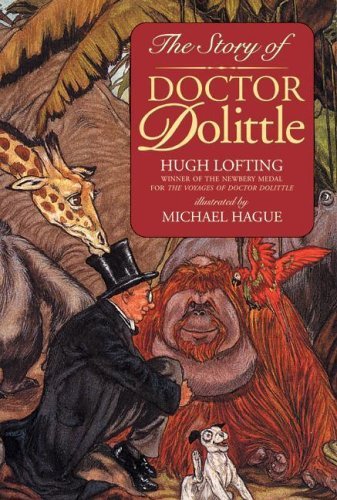
Hugh Lofting wrote “Dr. Dolittle”

John Dos Passos is best known for his USA Trilogy

Taylor Branch won the Pulitzer Prize for History for “Parting the Waters: Martin Luther King and the Civil Rights Movement 1954-63”

Quote: “I make no claim to be an authority on writing or illustrating for children. The fact that I have been successful merely means that I can write and illustrate in my own way.” – Hugh Lofting (creator of Doctor Dolittle)

Tip: If you want to be a successful writer, you have to be willing to promote your work and yourself. If you don’t, you may get published…but you’ll rarely get anywhere. Figure out what you’re comfortable with and do it. A good rule of thumb is to spend ten percent of your writing time on promo.

Jumpstart: Get a timer and set it for fifteen minutes, then write. Anything. Everything. Do not think about anything. Just write. No idea? Write about that.

January 13

Birthdays: A.B. Guthrie Jr. (1901), Carolyn Heilbrun (aka Amanda Cross) (1926), Michael Bond (1926), Flora Nwapa (1931), Horatio Alger Jr (1932), Ron Goulart (1933), Carolyn See (1934), Edmund White (1940), Frank Peretti (1951), Jay McInerney (1955), Claudia Emerson (1957), Lorrie Moore (1957),

A.B. Guthrie Jr. won the 1950 Pulitzer Prize for Fiction for “The Way West”

Claudia Emerson won the 2006 Pulitzer Prize for Poetry for “Late Wife”

Thought for the day: “The great advantage of having a bear as a central character is that he can combine the innocence of a child with the sophistication of an adult.” – Michael Bond (creator of Paddington Bear)

Tip: Know your audience. Writing for children, teens, young adults, adults all require a different style of writing. So do different genres. Figure out what you want to write, who you’re writing for, and learn the craft for that angle.

Jumpstart: The borough has just dumped four feet of snow in front of your driveway and you cannot get out. Come up with a plausible excuse for your boss as to why you can’t get to work. You’ve used the “snowed in” excuse one too many times.

Oh, sweet Paddington Bear, at the train station, with his blue coat (with the tag), red hat, and suitcase. Such adventures he had.

January 12 Writing

Birthdays: Charles Perrault (1628), Edmund Burke (1729), Laura Adams Amer (1874), Jack London (1876), Margaret Danner (1915), William Nicholson (1948), Haruki Murakami (1949), Walter Mosley (1952), David Mitchell (1969), Julia Quinn (1970),

Charles Perrault is noted for being the originator of the fairy tale genre.

Laura Amer won the 1932 Newbery Award winner for “Waterless Mountain”

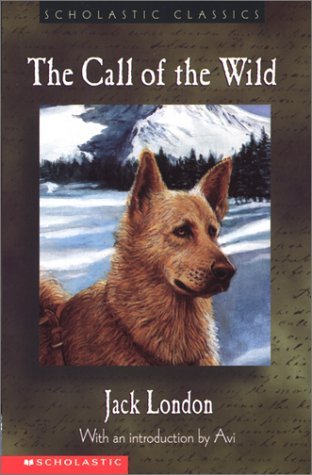
Quote: “You can’t wait for inspiration. You have to go after it with a club.” – Jack London

Tip: Be sure to give your characters conflicts to struggle against—both internally and externally. Basically, what do they want? Why do they want it? Why can’t they have it?

Jumpstart: Create a new creature for a fantasy world. What does it look like? Large or small? Furry, scaled, hairy? Legs? Wings? Would it be of use to humans? In what way? What does it eat? Where does it live? Be specific.

I read a lot of Jack London when I was in high school. Some of his works are still favorites. But Charles Perrault is the one who gave us tales we’ll remember forever – like Sleeping Beauty, Cinderella, Puss in Boots, and more.

January 11 Writing

Birthdays: Alice Rice (1870), Aldo Leopold (1887), Bernard DeVoto (1897), Alan Paton (1903), Manfred Lee (1905), Helen Howe (1905), Robert O’Brien (1918), Mary Rodgers (1931), Jill Churchill (1943), Diana Gabaldon (1952), Jasper Fforde (1961), Alethea Kontis (1976)

Alan Paton was a South African author and anti-apartheid activist who was famous for his first novel “Cry, the Beloved Country”.

Bernard DeVoto won the 1948 Pulitzer Prize for History for “Across the Wide Missouri”

Manfred Lee wrote under the name “Ellery Queen” and was famous for his mysteries.

Robert O’Brien won the 1972 Newbery Medal for “Mrs. Frisby and the Rats of NIMH”

Mary Rodgers, writer of books like “Freaky Friday” is the daughter of Richard Rodgers and she started out writing musicals.

Quote: “If you’re going to have more than one person read your book, they’re going to have totally different opinions and responses. No person – no two people – read the same book.” – Diana Gabaldon

         “ Getting a book published is one of the hardest things you’ll ever do and getting a picture book published is darned near impossible. Have a thick skin, and prepare yourself for truckloads of rejection and humiliation. But if you’re just masochistic and hard-headed enough to never give up, you’ll make it happen. (Just like anything else in this world.) I wish you the best of luck!”- Alethea Kontis, writer of YA books, picture books.

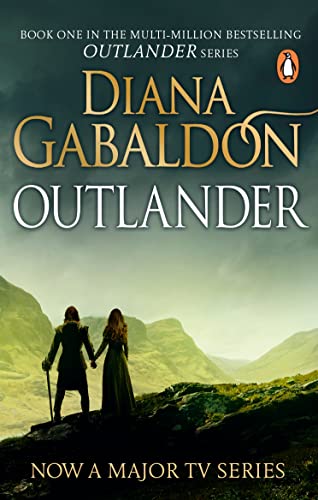
I love Diana Galbadon’s series, though I haven’t read them all. But I do like the way she writes.

And Ellery Queen has always been a favorite as well!

January 10 Writing

Birthdays: Robinson Jeffers (1887), Dumas Malone (1892), Cynthia Freeman (1915), Philip Levine (1928), Stephen Ambrose (1936), Daniel Walker Howe (1937), Jared Carter (1939), George Alec Effinger (1947), Dorianne Laux (1952), Steve Hamilton (1961)

Philip Levine won the 1995 Pulitzer Prize for Poetry for “The Simple Truth” and was appointed Poet Laureate of the US for 2011-2012.

Dumas Malone won the 1975 Pulitzer Prize for History for his biography of Thomas Jefferson

Daniel Howe won the 2008 Pulitzer for History for “What Hath God Wrought”

Dorianne Laux is a multiple prize winner for poetry

Quote: “If that voice you created that is most alive…isn’t carried throughout the whole poem, then…destroy where it’s not there.” – Philip Levine

Tip: Don’t jump point of view. Yes, I know some big authors do it and get away with it. That’s because they’re already established and make a lot of money for the publishers. If you’re new to the craft, you need to keep your POV to one per scene. If you must do more, be sure to add a space between speakers so the reader knows you’re changing POVs.

Jumpstart: Write your writing bio. No more than a hundred words – and in third person. Make it interesting, not just a grocery list of name, age, etc.

January 9 Reviews

I’m off to a slow start this year, but here are three I’ve read so far:

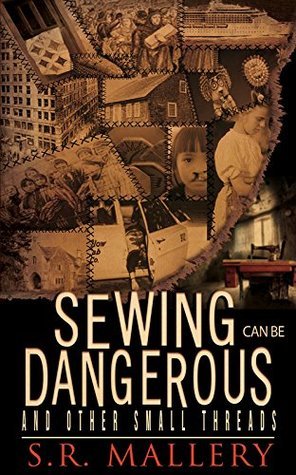
SEWING CAN BE DANGEROUS AND OTHER SMALL THREADS by S.R. Mallery

4****

This is an anthology of eleven short stories all centered around sewing or other needlework and crafts (like macrame). Like most anthologies, I enjoyed some more than others. Some have darker endings and take place in many different time periods. But all are interesting.

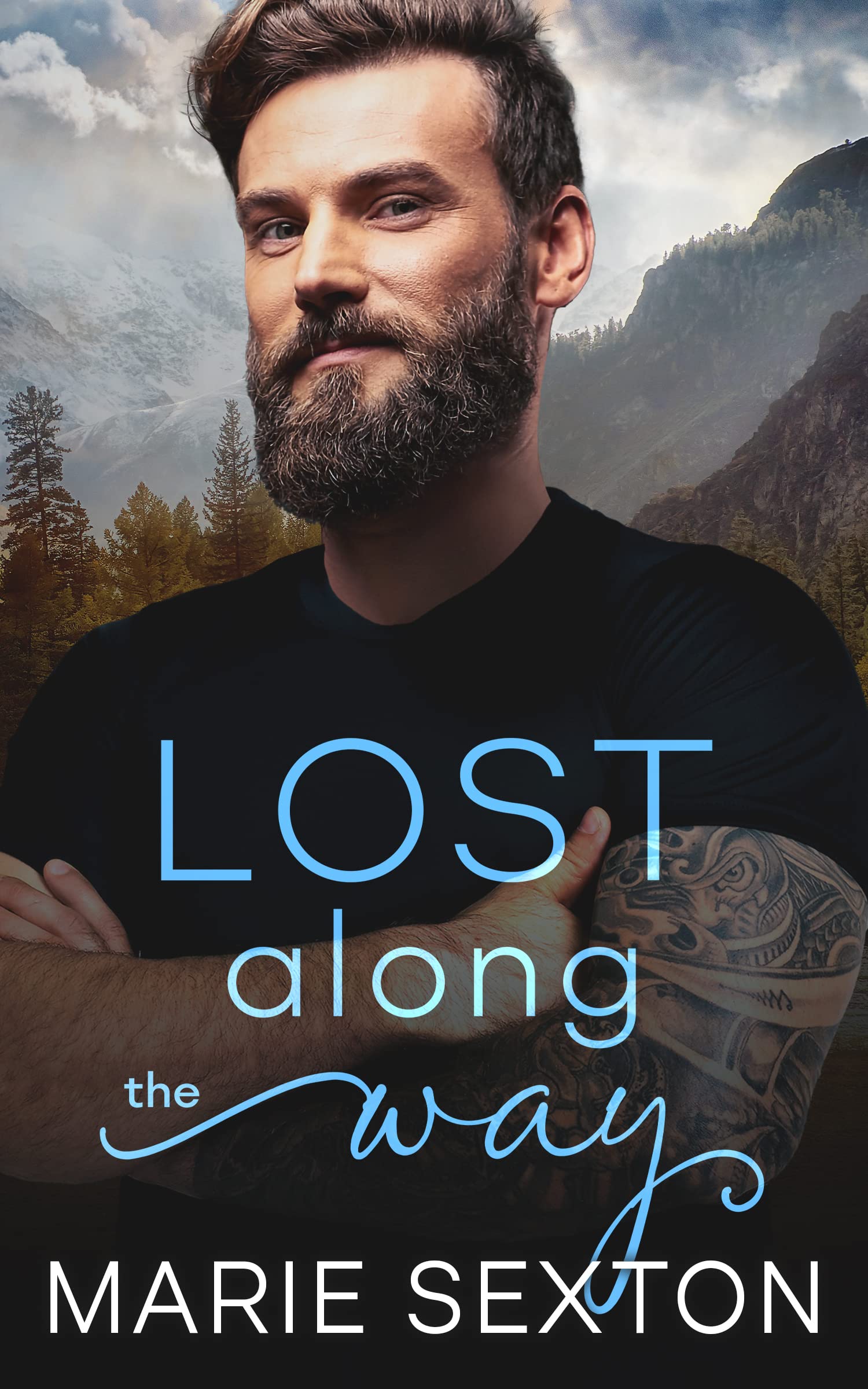
LOST ALONG THE WAY by Marie Sexton

4****

Spicy hot with a hint of the paranormal. LGBTQ. Can a magical cookbook make everything in your life make sense? Probably not, but it does help Daniel find his way, along with Chase and Landon. The last thing Daniel expects to find when he returns to Laramie to clean out his parents home after their deaths is a hunky, husky man who brings out the joy in him. More so than his partner of fifteen years, Chase. But the magic of the recipes in Granny B’s cookbook help them sort everything out to a satisfying conclusion.

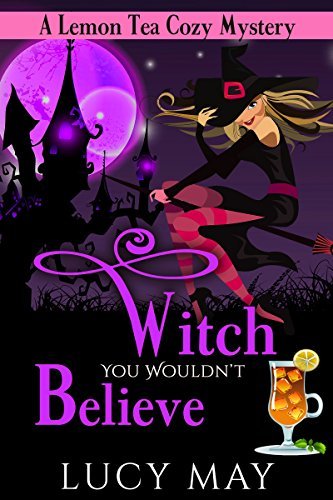
WITCH YOU WOULDN’T BELIEVE by Lucy May

4****

This is a good beginning to a series that will obviously follow – there are way too many dangling threads left to think there won’t be. Unlike most cozies, this one is more like a serialized story in that although the “mystery” was sort of solved, it’s definitely continuing because there are too many unanswered questions. The characters are quirky and fun—I can almost see the four ladies getting together for tea…and spell casting. And Violet learning about her heritage as a witch. I look forward to more from this author. Recommended for a light paranormal mystery that will obviously continue.

Sewing Can Be Dangerous And Other Small Threads by S.R. Mallery

January 8 Writing

Birthdays: Wilkie Collins (1824), Linnie Marsh Wolfe (1881), Storm Jameson (1891), Dennis Wheatley (1897), Peter Taylor (1917), Charles Tomlinson (1927), Alexandra Ripley (1934), Stephen Hawking (1942), Terry Brooks (1944), Nancy Bond (1945), Karen Tei Yamashita (1951)

Linnie Marsh Wolfe won the 1946 Pulitzer Prize for Biography for “Son of the Wilderness: The Life of John Muir”

Peter Taylor won the 1986 Pulitzer Prize for Fiction for “A Summons to Memphis”

Alexandra Ripley is best known for her book “Scarlett”, a sequel to “Gone with the Wind”

Quote: “I have always held the old-fashioned opinion that the primary object of work of fiction should be to tell a story.” – Wilkie Collins

         “I still approach each book with the same basic plan in mind: to put some people under severe stress and see how they hold up.” – Terry Brooks

Tip: Keep at it. And grow a thick skin. Writing is not easy and rejections and bad reviews hurt. A lot. Learn to take it. You can spend a day wallowing, but then, let it go. You have to or it can stall you. Keep going.

I adore Terry Brooks books. Especially his “Shannara” series. Found out though that while I can read them, I can’t handle watching the series. However, his “Magic Kingdom for Sale/Sold” is and will always be one of my favorite fantasy books.

January 7 Writing

Birthdays: John Remsburg (1848), Zora Hurston (1891), Cresson Kearny (1914), Robert Duncan (1919), Gerald Durell (1925), William Blatty (1928), Edwin Torres (1931), Kay Chorao (1936), Hayford Peirce (1942), Ben Fong-Torres (1945), Nicholson Baker (1957), Billy Merrell (1982),

Zora Hurston was an American author, anthropologist, and filmmaker. She portrayed racial struggles in the early-1900s American South and published research on hoodoo. The most popular of her four novels is “Their Eyes Were Watching God”, published in 1937. She also wrote more than 50 short stories, plays, and essays.

William Blatty is best known for his 1971 novel “The Exorcist”, for which he won the Academy Award for the screenplay of its film adaptation and was nominated for Best Picture as its producer. The film also earned Blatty the Golden Globe Award for Best Motion Picture – Drama as producer.

Edwin Torres is best known for his book “Carlito’s Way.”

Thought for the day: “Poetry is prose in slow motion.” – Nicholson Baker, The Anthologist

Tip: Does your character have an accent or a unique way of talking? Give us a few words to get the flavor of their speech but don’t do their entire dialogue in it. Reading a couple words in street slang is okay. Reading an entire book in it? No.

Jumpstart: Start a reading and writing journal. What does writing mean to you and why do you write? Note the last five books you’ve read and what you liked or disliked about them.

I’ve tried reading William Blatty and Edwin Torres – nope. Not my cup of tea. So I picked this one instead. 🙂

January 6 Writing

Birthdays: Carl Sandburg (1878), Khalil Gibran (1883?), John Holmes (1904), Wright Morris (1910), Alan Watts (1915), E.L. Doctorow (1931), Allen Appel (1945), Barry Lopez (1945), Carolyn D. Wright (1940), Elizabeth Strout (1956), Nigella Lawson (1960), Antonya Nelson (1961), Ree Drummond (1969), Karin Slaughter (1971)

Carl Sandburg is a three-time Pulitzer Prize winner.

Kahlil Gibran is best known for his 1923 book “The Prophet”

Wright Morris is a two-time winner of the National Book Award for Fiction

Carolyn Wright won the 2010 National Book Award for Poetry

Elizabet Strout won the 2009 Pulitzer Prize for Fiction for “Olive Kitteridge”

Quotes: “Writing is like driving at night in the fog. You can only see as far as your headlights, but you can make the whole trip that way.” – E.L.Doctorow

“Slang is a language that rolls up its sleeves, spits on its hands, and goes to work.” – Carl Sandburg

Tip: Use all five senses in writing. If your character walks past a bakery, let the reader smell the aromas. Her perfume? Have him inhale deeply. How does the wind in the trees sound? How does his clammy shirt feel on a hot day? Give us details that put us there with the characters, but be careful not to overdo.

Jumpstart: You character is a secret agent with many aliases. Select five names to represent his or her different personalities and describe how the character dresses or changes his/her appearance, job, and background information to become each persona.