June 11 Writing Tips, Tricks, Thoughts

Birthdays: Ben Jonson (1572), Yasunari Kawabata (1899), Jacques Cousteau (1910), William Styron (1925), Athol Fugard (1932), Christina Crawford (1939), Robert Munsch (1945), Duncan Steel (1955), Jennifer Armentrout (1980), Laura Vaccaro Seeger (1960?)

William Styron won the National Book Award and the Pulitzer Prize for Fiction for “Sophie’s Choice”

Laura Seeger was a two-time Caldecott Honor winner.

Quote: “One of the things I do is try to end a lot of scenes and chapters on mini cliffhangers. I think when it comes to plot twists you want to keep your readers on their toes.” – Jennifer Armentrout

Tip: Remember that not everyone will love your book(s). There will be rejections and bad reviews—that doesn’t necessarily mean you’re a bad writer, you just haven’t reached the right audience yet. Don’t let it get you down.

Jumpstart: You character is digging a hole in her backyard to plant a tree and she digs up a human skeleton. What happens next?


June 10 Writing Tips, Tricks, Thoughts

Birthdays: Terence Rattigan (1911), Saul Bellow (1915), James Salter (1925), Nat Hentoff (1925), Maurice Sendak (1928), E.O. Wilson (1929), Aranka Siegal (1930), M.C. Beaton (1936), Linda Lael Miller (1949)

Maurice Sendak was an American illustrator and writer of children’s books. He is best known for his book Where the Wild Things Are.

Aranka Siegal was a Newbery Honor recipient for her book “Upon the Head of the Goat” in 1982.

Saul Bellow was awarded the Pulitzer Prize, the Nobel Prize in Literature, and the National Medal of Arts. He is the only writer to win the National Book Award for Fiction three times for Herzog, Mr. Sammler’s Planet, and The Adventures of Augie March.

Quote: “A playwright must be his own audience. A novelist may lose his readers for a few pages; a playwright never dares lose his audience for a minute.” – Terence Rattigan

Tip: Your book will never be finished to your satisfaction. At some point, you need to say “enough” and send it out.

Jumpstart: It’s the middle of the night and your character can’t sleep because they’re too on edge because of… what? Why are they on edge? How do they calm down to sleep?

June 9 Writing Tips, Tricks, Thoughts

Birthdays: Marcia Davenport (1903), Keith Laumer (1925), Charles Webb (1939), Joe Haldeman (1943), James Kelman (1946), Gregory Maguire (1954), Patricia Cornwell (1956), Tony Horwitz (1958), Paul Beatty (1962)

Joe Haldeman is an American science fiction author. He is best known for his novel The Forever War.

James Kelman is a Scottish writer. His novel A Disaffection won the James Tait Black Memorial Prize for Fiction in 1989. Kelman won the 1994 Booker Prize with How Late It Was, How Late.

Gregory Maguire is an American novelist. He is the author of Wicked: The Life and Times of the Wicked Witch of the West and Confessions of an Ugly Stepsister.

Patricia Cornwell is an American crime writer. She is best known as the creator of a series of novels featuring Kay Scarpetta, a medical examiner that started with Postmortem.

Paul Beatty is an American author who won the National Book Critics Circle Award and the Man Booker Prize for his novel The Sellout.

Quote: “Even if you are a best-seller you feel insecure because it is all so unpredictable.” – Patricia Cornwell

Tip: If you’re given a deadline—meet it! If there’s a valid reason why you can’t (hospital=valid; binging on Netflix does not), let your editor know as soon as possible.

Jumpstart: Finish the following: I don’t know what made me look out the window at that moment, but I did. Unfortunately…

Spotlight: Victoria Smith

Twelve years after a devastating flu that eliminated much of the world’s population, the human race is trying to survive while living a much simpler life. Gabriella is a midwife and a demon hunter. She helps bring new life into the world, while doing her best to prevent evil from growing. Only there seems to be much more evil lately, and far less new life. Something big is happening and she may be the only one who can stop it.

Jack is an angel in a human vessel sent to protect and assist Gabby in solving the puzzle of good and evil she faces. It should be a simple assignment, but he doesn’t count on the emotions he now must deal with, or the attraction he feels. He faces exile if he oversteps his moral boundaries, but when he realizes his love for Gabby, he wonders if falling from grace because of her is so bad.

Amazon

Victoria Smith wrote her first romance at the age of nine and hid the story from her brothers to avoid being teased. Her mother recently found the folded notebook paper and, if you’re lucky, one day she’ll reveal the hero in that story. Now, she writes urban fantasy, paranormal romance, romantic suspense and women’s fiction – always with a happy, or at least satisfying, ending.

http://www.amazon.com/Victoria-Smith/e/B00QC12VZG/

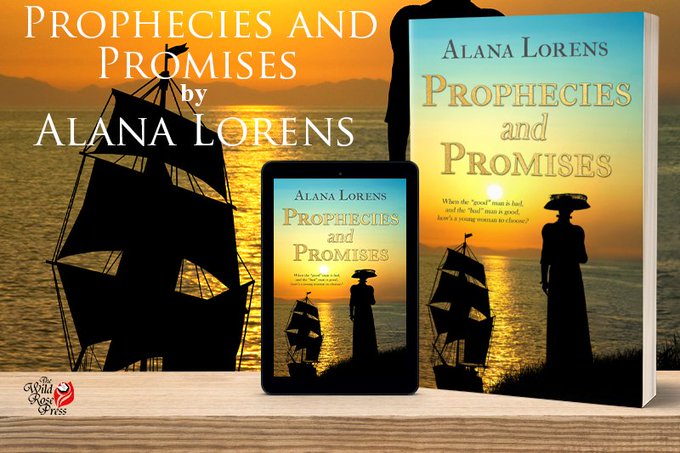
Spotlight: Alana Lorens

When the ‘good’ man is bad, and the ‘bad’ man is good, how’s a young woman to choose?

Blurb:  Tamsyn McKiernan thinks her dreams have come true. She’s engaged to a dashing Key West bachelor and finally in her widowed father’s good graces. But in her heart, she knows something’s wrong. She loves the ocean and the quiet pleasures of nature—so what does the aristocratic life she’ll lead truly hold for her? Mercenary captain Drake Ashton is neck deep in preparations for the Spanish-American War, running guns and other supplies to Cuban natives who want out from under their Spanish masters. He and his brother Freddie risk their lives daily, focused on saving his friends on the island. Nothing else matters but his mission. A chance encounter with a spiny sea urchin brings the two together, and neither of their lives will ever be the same again.

Buy Links

Ebooks  Amazon

Paperback: Amazon

B&N ebook

B&N paperback

Book Trailer: https://www.youtube.com/watch?v=iFWs54EUJeU

Author Bio

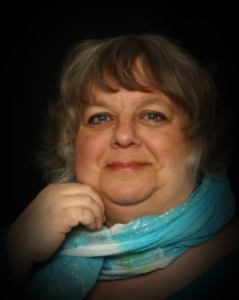
Alana Lorens has been a published writer for more than forty years. Currently a resident of Asheville, North Carolina, the aging hippie loves her time in the smoky blue mountains. One of her novellas, THAT GIRL’S THE ONE I LOVE, is set in the city of Asheville during the old Bele Chere festival. She lives with her daughter on the autism spectrum, who is the youngest of her seven children, and she is ruled by three crotchety old cats, and six kittens of various ages.

Author Links

Website      http://Alana-lorens.com

Facebook   https://www.facebook.com/AlanaLorens/

Goodreads https://www.goodreads.com/author/show/4829967.Alana_Lorens

Amazon Author Page

Bookbub:   https://www.bookbub.com/authors/alana-lorens

Twitter:  @AlexanderLyndi

Instagram: https://www.instagram.com/alexander_lyndi/

 Historical romances are fun to write because all the research you do teaches you something real about the era and the place and time. I love modern Key West, having spent many hours at Sloppy Joes, watching the sunset at Mallory Square, and visiting the turtle kraals, but learning about the city at the turn of the 20th century was fascinating.

Because of Key West’s proximity to Cuba (it’s actually closer to Cuba than it is to mainland USA), the city became a launching point for the American response to the Cuban war for freedom, in a conflict that came to be called the Spanish-American War. Our story involves a mercenary captain (read: pirate), who supports a small group of Cuban rebels at Matanzas, and a young lady who belongs to the “codfish aristocracy” in Key West. While these two might not have met in traditional social circles, their mutual love of nature brings them together in a most unexpected setting. Their idea of where their lives might go begins to unravel there, and anything could happen!

June 6 – New Reviews

New reviews are up. Some really good romances this time around and an interesting paranormal cozy mystery that would have scored higher if it had been edited better.

Under Romance:

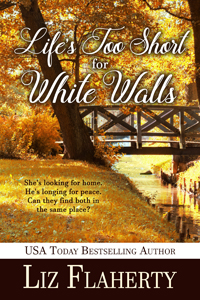
“Life is Too Short for White Walls” by Liz Flaherty – 5*****

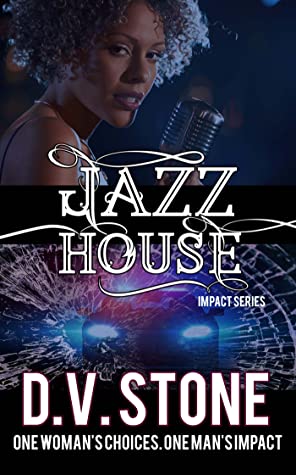
Jazz House by D.V. Stone – 4**** for this second in series

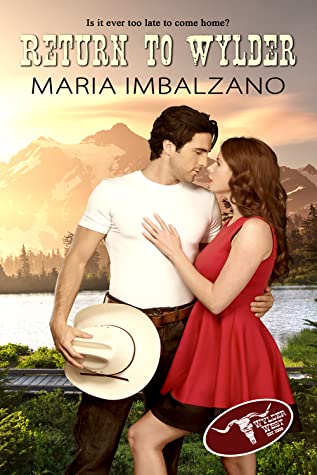
Return to Wylder by Maria Imbalzano – 5*****

Under Mysteries:

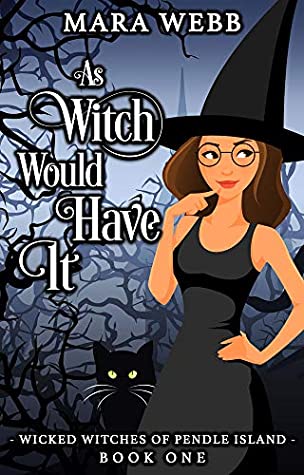
As Witch Would Have It by Mara Webb – 3***

June 5 Writing Tips, Tricks, Thoughts

Birthdays: Ivy Compton-Burnett (1884), Federico García Lorca (1898), Richard Scarry (1919), Cornelius Ryan (1920), Christy Brown (1932), Bill Moyers (1934), Allan Ahlberg (1938), Margaret Drabble (1939), L. R. Wright (1939), Orlando Patterson (1940), David Hare (1947), Ken Follett (1949), Suze Orman (1951), Evan Marshall (1956), Rick Riordan (1964), Gayle Forman (1970), Chuck Klosterman (1972),

Christy Brown was an Irish writer and painter whose cerebral palsy left him able to write only with his left foot.

Quote: “What politicians want and what creative writers want will always be profoundly different, because I’m afraid all politicians, of whatever hue, want propaganda, and writers want the truth, and they’re not compatible.” – David Hare

Tip: A novel is made of scenes and sequels. Scenes are where something happens; sequels are bridges where things may slow down a little. You should have a mixture of both.

Jumpstart: Finish this scene: I crept down the stairs, not expecting… (use: tree, panda, coral, clock)

June 4 Writing Tips, Tricks, Thoughts

Birthdays: Jacques Roumain (1907), Robert Fulghum 1937), Joyce Meyer (1943), Jack N. Rakove (1947), Leigh Kennedy (1951), Melanie Phillips (1951), Simon Cheshire (1954), Val McDermid (1955), Joyce Sidman (1956), Kristine Kathryn Rusch (1960), Marie Ndiaye (1967), Joe Hill (1972)

Jack Rakove won the 1997 Pulitzer Prize for History for “Original Meanings”

Quote: “As one of my creative writing professors once said, there are only seven plots. What makes those plots different is how you handle them, your voice, your style, and your way of thinking. That’s all. People can mimic your style, but they can never achieve your unique point of view.” – Kristine Kathryn Rusch

Tip: Internal conflict is what a character struggles with on the inside—wanting that piece of cheesecake when you know it’s not good for you. External conflict is what anyone can see—two friends arguing over who has earned the right to eat the cheesecake. We all have both and so should your characters.

Jumpstart: You’re going to a Renaissance Faire. Do you go in costume or as a regular person? If in costume, what does it look like and what kind of character are you portraying? Royalty? Or a serving wench or pirate?

June 3 Writing Tips, Tricks, Thoughts

Birthdays: Sydney Smith (1771), Robert Hillyer (1805), Allen Ginsberg (1926), Marion Zimmer Bradley (1930), John Norman (1931), Larry McMurtry (1936), Kathleen Woodiwiss (1939), Lawrence Lessig (1961), Anderson Cooper (1967), John Hodgman (1971),

Robert Hillyer won the 1934 Pulitzer Prize for Poetry

Quote: “Whoever controls the media, the images, controls the culture.” – Allen Ginsberg

“You expect far too much of a first sentence. Think of it as analogous to a good country breakfast: what we want is something simple, but nourishing to the imagination.” – Larry McMurtry

Tip: Decide what genre you want to write in and then learn about that genre. Each one—romance, science fiction, mystery, thriller, etc.—has its own rules and conventions.

Jumpstart: Write an article where you’re interviewing a character from a story for the news and give it a different spin. For instance, interview the Big Bad Wolf. Why does everyone call him that? He’s just trying to make a living, bring home the bacon for his family.

June 2 Writing Tips, Tricks, Thoughts

Birthdays: Marquis de Sade (1740), Thomas Hardy (1840), Karl Gjellerup (1857), Edwin Teale (1899), Dorothy West (1907), Barbara Pym (1913), Norton Juster (1929), Anita Lobel (1934), Carol Shields (1935), Helen Oxenbury (1938), Jack Gantos (1951), Jim Knipfel (1965), Sean Stewart (1965), David Bezmozgis (1973), Salvatore Scibona (1975),

Karl Gjellerup was a Danish writer and co-winner of the 1917 Nobel Prize in Literature.

Edwin Teale’s book “Wandering Through the Winter” won the 1966 Pulitzer Prize for Nonfiction

Carol Shields won the 1993 Pulitzer Prize for Fiction for “The Stone Diaries”

Quote: “Write the book you want to read, the one you cannot find.”– Carol Shields

Tip: Learn what writing terms mean. Genre, sub-genre, black moment, POV, GMC, etc. Knowing the jargon is as important as knowing what to do with it.

Jumpstart: You are cooking dinner for an important guest. This person can make or break you. Who is the guest? Why does s/he have such power over you? Write a scene where everything that could go wrong does. Write it first as a comedy, then a tragedy.

Personal peeve: I read a lot of books and usually enjoy them, but lately, I’ve been noticing some of them (usually self-published) are so full of grammar and spelling mistakes that, no matter how good the story, I cannot enjoy it because of this. I’m reading one right now – a quirky paranormal cozy mystery – that had five of these problems on the first three pages of the book and no, it’s not an ARC. It is a final, published copy. Please, folks, I know you want to get your stories out there, but spend the money and use a professional editor.

Second tip: Oddly enough, in the past week, I’ve seen three books that misuse the word hangar/hanger. Hangar (with two a’s) is a place to store planes. Hanger (one a) is a tool to put your clothes on in the closet. They are not interchangeable.